Best construction quoting software for small contractors in 2026

Small contractors don't need enterprise bid software. Best overall: Buildertrend wins for owner-led shops that want quoting bundled with scheduling and job costing. Best for high-volume commercial bidding: ProEst. Best budget option: Contractor Foreman. Best for shops whose scope-to-quote process won't fit any packaged tool: a custom AI system built around how the office already works.
- Buildertrend is the best construction quoting software for small contractors who want quoting tied to scheduling and change orders in 2026.
- STACK and PlanSwift-style takeoff tools fit trades doing heavy digital measurement, not general remodelers.
- ProEst suits GCs bidding several commercial jobs a week; Contractor Foreman is the budget pick.
- Shops with a nonstandard estimating workflow often outgrow packaged software before they outgrow the price tag.
Why this matters
Most general contractors, remodelers and specialty trades run under 50 employees with no dedicated estimator, which is exactly the group Agently builds AI systems for. A quote that takes three days to turn around because it's re-keyed from a site visit into three different tools costs jobs, not just time.
The Associated General Contractors of America's annual Construction Outlook survey has repeatedly found that firms cite worker shortages and scheduling strain as ongoing pressure points, which pushes more of the estimating burden onto the owner or office manager. The National Association of Home Builders tracks residential construction as an industry dominated by small, owner-operated firms, not large national builders. The U.S. Census Bureau's Construction Spending report has shown total U.S. construction spending running above $2 trillion a year in recent reporting periods, spread across a market made up mostly of small and mid-size firms competing for the same bids.
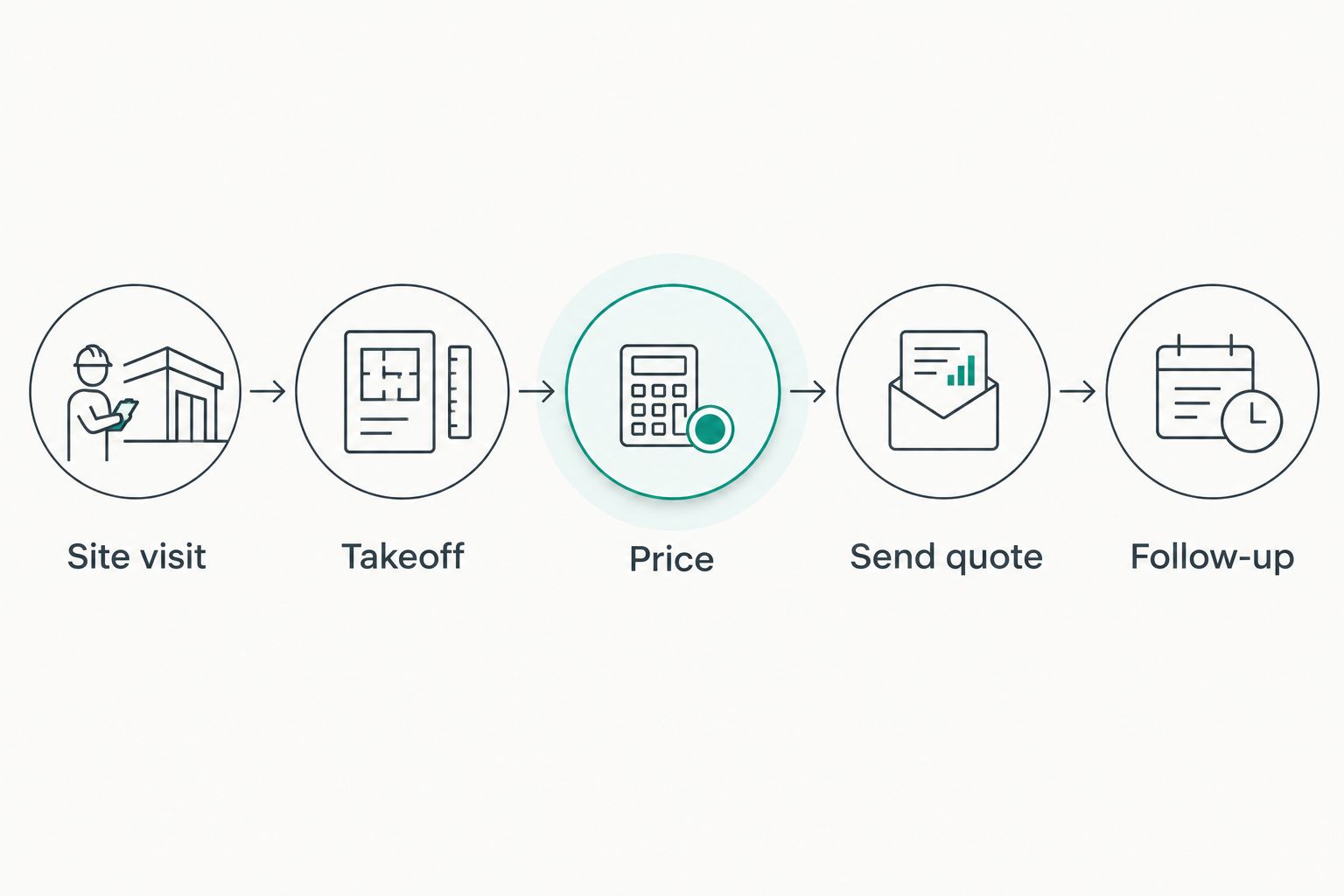
Quoting software exists to close the gap between a site visit and a signed contract. Some tools do that well. Some do it for a trade that isn't yours.
What makes the best construction quoting software
- Takeoff and cost database accuracy: does the tool price materials and labor close to what the job actually costs, or does every estimate need manual correction
- Speed from site visit to priced quote: how many steps between a walkthrough and a document the customer can sign
- Job costing and change order tracking: does the quote stay linked to the job once work starts, or does it die the moment it's sent
- Field usability: can a superintendent or the owner use it from a phone on site, not just from a desktop in the office
- Learning curve for a small office: does a 10 to 50 person shop need a trained estimator to run it, or can the office manager pick it up
- Fit for the trade: heavy takeoff for roofing and drywall is a different problem than pricing a kitchen remodel
Construction quoting software at a glance
| Software | Best for | Standout feature | Key limitation |
|---|---|---|---|
| Buildertrend | Bundled scheduling and quoting | Quotes convert straight into scheduled jobs and change orders | Setup takes real time to configure for a small crew |
| JobTread | Tying quotes to real job costs | Job costing view shows quoted versus actual cost line by line | Takeoff still happens outside the tool |
| STACK | Trades with heavy digital takeoff | On-screen takeoff from uploaded plans with built-in measurement tools | Overkill for a GC mostly doing design-build remodels |
| Clear Estimates | Remodelers wanting a cost database | Cost database organized by trade, ready to adjust per job | Less useful for new construction or commercial bids |
| ProEst | High-volume commercial bidding | Handles multiple concurrent bids and subcontractor comparisons | Heavier than what a five-person crew needs |
| Contractor Foreman | Budget-friendly all-in-one | Quoting bundled with basic project management at low cost | Fewer dedicated takeoff and estimating tools |
| Custom AI system | Shops whose workflow doesn't fit packaged tools | Built around the exact intake, pricing rules and paperwork already in use | Requires a scoped engagement first, not a subscription click-to-start |
1. Buildertrend: best construction quoting software for bundled scheduling
Buildertrend combines quoting with scheduling, client communication and change order tracking in one system. A quote built in the tool can turn into a scheduled job without re-entering the same scope twice.
Buildertrend pros:
- Quotes, schedules and change orders live in one place
- Client-facing portal keeps homeowners updated without extra calls
- Works for remodelers and custom home builders alike
Buildertrend cons:
- Configuration takes real setup time for a first-time user
- Takeoff still depends on outside plans or a separate tool
Best for: GCs and remodelers who want quoting tied to the rest of the job, not standalone. Verdict: Buy.
2. JobTread: best construction quoting software for job costing
JobTread ties every quote to a live job cost view, so the office can see quoted cost against actual cost as the job runs, not just at closeout.
JobTread pros:
- Job costing updates in real time as materials and labor post
- Change orders adjust the budget automatically
- Built for owner-led shops, not enterprise construction firms
JobTread cons:
- Takeoff and material counts still happen in a separate tool
- Reporting has a learning curve for a first-time office manager
Best for: Contractors who lose money on jobs because nobody checks quoted cost against actual cost until the job is done. Verdict: Buy.
3. STACK: best construction quoting software for heavy digital takeoff
STACK is built around on-screen takeoff: upload a plan set, measure directly on the drawing, and generate material counts from that measurement.
STACK pros:
- Fast, accurate takeoff for roofing, drywall, concrete and similar trades
- Measurements roll straight into a priced estimate
- Works well for high plan-set volume
STACK cons:
- Adds little value for design-build remodelers without formal plans
- Priced per user, which adds up for a larger crew
Best for: Trades that quote off blueprints all day, not off a walkthrough. Verdict: Buy for takeoff-heavy trades, Skip for design-build remodelers.
4. Clear Estimates: best construction quoting software for remodelers
Clear Estimates ships with a pre-built cost database organized by trade, meant to be adjusted rather than built from scratch.
Clear Estimates pros:
- Cost database saves setup time for common remodel scopes
- Simple enough for an office without a dedicated estimator
Clear Estimates cons:
- Less suited to new construction or large commercial bids
- Cost database still needs local adjustment for accuracy
Best for: Kitchen and bath remodelers who want a starting cost database instead of a blank sheet. Verdict: Hold, test it against three recent jobs first.
5. ProEst: best construction quoting software for commercial bidding
ProEst is built for firms bidding several commercial jobs at once, with tools to compare subcontractor pricing across bids.
ProEst pros:
- Handles multiple concurrent bids without losing track
- Subcontractor comparison built into the bidding workflow
ProEst cons:
- More tool than a five-person residential crew needs
- Setup and training take longer than lighter tools
Best for: GCs bidding commercial work weekly, not the occasional homeowner remodel. Verdict: Buy for commercial bidders, Skip for residential-only shops.
6. Contractor Foreman: best budget construction quoting software
Contractor Foreman bundles quoting with basic project management at a lower cost than the full project-management suites above.
Contractor Foreman pros:
- Covers quoting, scheduling and basic job tracking in one login
- Lower barrier to entry for a small office
Contractor Foreman cons:
- Fewer dedicated estimating and takeoff tools than specialized apps
- Interface feels dated next to newer tools
Best for: Owner-led shops that want one tool covering the basics without a specialized takeoff app. Verdict: Hold, fine if the basics are all you need.
7. Custom AI estimating system: best for workflows packaged software can't fit
Some shops try three of the tools above and still re-key data between them, because the pricing rules, intake questions and paperwork are specific to how that owner already runs jobs. Agently designs and builds custom AI systems that turn a site visit, photos and voice notes into a priced quote using the exact scope logic the office already applies, without forcing the workflow into someone else's template. Every engagement is scoped against a dollar number before any build starts, and the client owns what gets built: the code sits in their own repositories, the AI accounts run in their name. A practical AI consulting engagement covers what that scoping actually looks like.
Custom AI system pros:
- Built around the shop's actual intake and pricing logic, not a generic template
- Ownership sits with the contractor, not a vendor subscription
- Fits construction, distribution, agriculture and professional services workflows Agently has already worked in
Custom AI system cons:
- Not a click-to-start subscription; it starts with a scoping step
- Overkill for a shop whose current quoting tool already works fine
Best for: Contractors who've outgrown packaged quoting software but don't want to force-fit their process into another one. Verdict: Buy, if the workflow is the actual bottleneck.
How we ranked these
Each tool above was placed against the criteria listed earlier: takeoff accuracy, speed from site visit to quote, job costing tie-in, field usability, learning curve, and trade fit. No two tools compete for the same use case here on purpose. A GC comparing Buildertrend to STACK is comparing apples to a different fruit entirely; one bundles scheduling, the other owns takeoff.
Which construction quoting software should you choose?
If quoting and scheduling both feel disconnected today, start with Buildertrend or JobTread. If the bottleneck is measuring plans fast and accurately, STACK earns its keep. If the office is small and the budget is tight, Contractor Foreman covers the basics. If none of that fits because the actual scope-to-quote process is unique to the shop, that's the signal a packaged tool won't solve it and a scoped conversation about a custom system is the next move, not another subscription trial.
See where a custom system fits
Every build starts with a scoped review, not a subscription trial.
FAQ
What is the best construction quoting software for small contractors in 2026?
Buildertrend is the best overall pick for small contractors in 2026 because it ties quoting to scheduling and change orders in one system. Trades with heavy digital takeoff often do better with STACK, and budget-focused shops lean toward Contractor Foreman.
Is Buildertrend better than JobTread?
Buildertrend covers more ground, bundling scheduling and client communication with quoting, while JobTread focuses more tightly on tying quotes to real-time job costing. The better fit depends on whether scheduling or job costing is the bigger pain point today.
Do small contractors need takeoff software or just quoting software?
Trades that price off blueprints daily, like roofing or drywall, benefit from dedicated takeoff tools such as STACK. Design-build remodelers working from a site visit rather than formal plans usually don't need a separate takeoff tool.
Can quoting software replace an estimator?
Packaged quoting software speeds up the process but still depends on someone entering scope, materials and pricing rules correctly. It reduces the workload; it doesn't remove the judgment call an experienced estimator brings.
What happens when quoting software doesn't fit how a shop actually estimates?
Contractors often end up re-keying data between the quoting tool, the proposal document and the job schedule, which is the exact gap a custom AI system is built to close. That's a sign the workflow needs a scoped fix rather than another off-the-shelf tool.
Should a five-person crew use ProEst?
Generally no. ProEst is built for firms bidding multiple commercial jobs concurrently, and that overhead isn't worth it for a small residential-only crew.
One last thing
The tool matters less than what happens after the quote goes out. Every piece of software on this list is good at building the price. None of them chase down the customer who never opened it. That follow-up gap, not the estimate itself, is usually where small contractors lose the most jobs in 2026.
If the estimating process is the actual bottleneck rather than the software brand, what a custom AI agent costs to build in 2026 is worth reading before picking a next tool at all.