AI consulting services: what a practical engagement includes
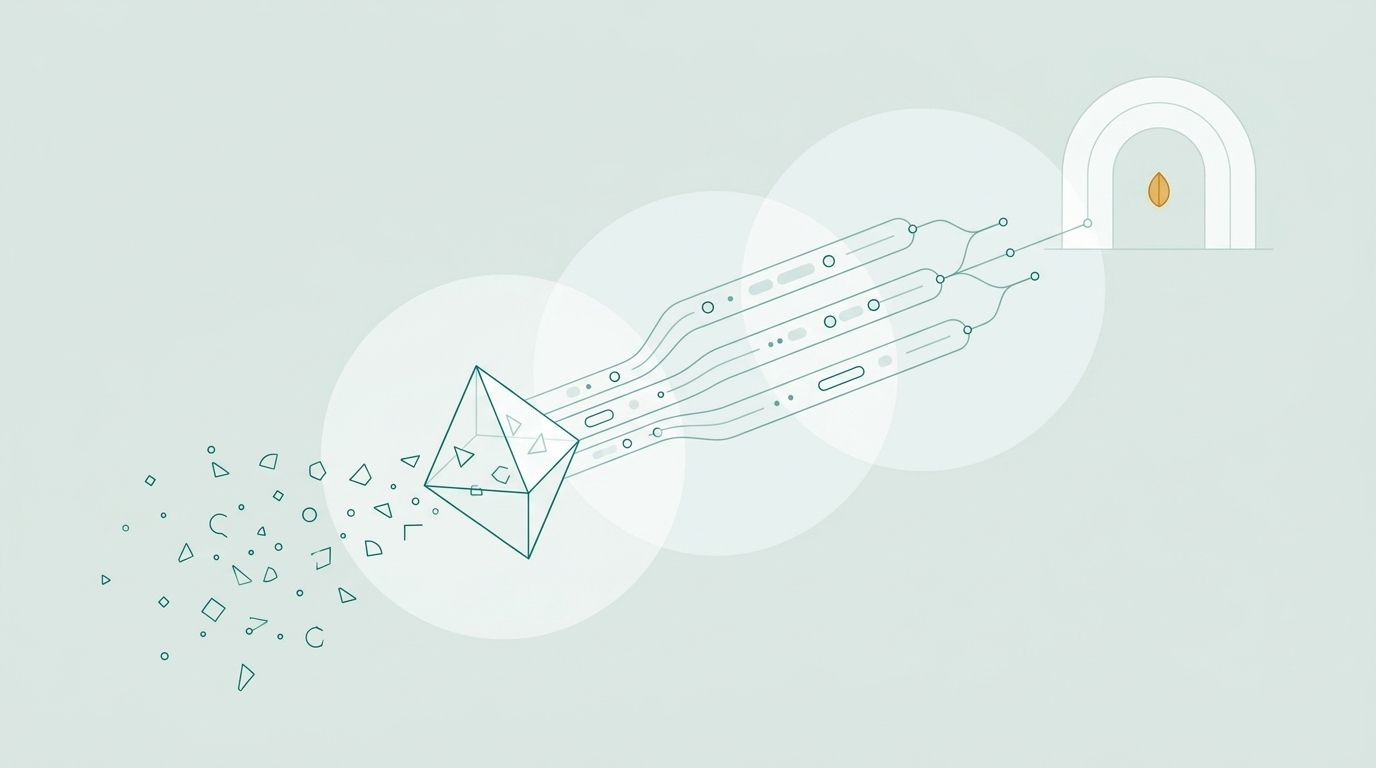
AI consulting services should turn one expensive business bottleneck into a working system your team can own. A practical 2026 engagement starts with the return, tests the riskiest assumptions early, builds in small stages, and ends with a measured handoff—not a long strategy document.
- AI consulting services should start with one measurable business problem, not a list of tools.
- A practical engagement moves through diagnosis, ROI math, a working pilot, deployment, and ownership transfer.
- Agently is best for small and mid-size businesses that want a custom system they own.
- The right first project is valuable, repeatable, measurable, and narrow enough to test safely.
Why this matters
Businesses rarely need more ideas about AI. They need to know which workflow is worth changing, what the return could be, where the risk sits, and who owns the result after launch.
That is the standard a buyer should use in 2026. Agently positions AI consulting services around working systems, measurable return, progressive deployment, and client ownership. The engagement is useful only if it produces an operational change your team can verify.
What do AI consulting services include in 2026?
Practical AI consulting services include five connected parts:
- Select one costly workflow.
- Define the current baseline and expected return.
- Design the smallest useful system.
- Test it with real work before expanding it.
- Transfer control, documentation, and measurement to the client.
The order matters. Starting with software selection before the business case is clear creates activity without proving value. Starting with the workflow forces every technical choice to answer a business question.
1. Select one costly workflow
The first step is not an open-ended review of everything AI can do. It is a focused decision about one process that consumes time, delays revenue, creates errors, or leaves customers waiting.
Strong starting points share four traits:
- The work happens repeatedly.
- The input and expected output can be described.
- A delay or mistake has a visible business cost.
- A person can review exceptions when the system is uncertain.
For a construction company, that could mean turning site notes into a first estimate draft, routing new inquiries, or sending routine customer updates. For a professional-services firm, it could mean intake, document sorting, scheduling, or drafting standard paperwork.
The best first AI project is not the most ambitious one. It is the smallest workflow with a return you can measure.
2. Define the baseline and ROI case
A consultant should document how the work happens now before proposing a new system. Without a baseline, faster and better remain opinions.
The baseline can use a short set of operating measures:
- Staff time spent per job or request
- Number of handoffs
- Waiting time before the next action
- Rework caused by missing or incorrect information
- Opportunities lost because follow-up was late
- Volume handled during a normal week or month
The ROI case should show conservative, expected, and aggressive outcomes. Each version should use the same formula and change only the assumptions. That makes the decision visible instead of hiding it inside a sales forecast.
A simple model is:
| Input | What to record |
|---|---|
| Current effort | Hours spent on the workflow |
| Loaded labor cost | Cost of those hours |
| Avoidable delay | Revenue or capacity held up |
| Expected reduction | Time or errors the system removes |
| Ongoing cost | Software, review, and maintenance |
| Net return | Annual benefit minus annual cost |
The model does not need false precision. It needs assumptions a business owner can challenge. If a change in one assumption destroys the return, the project is not ready.
3. Design the smallest useful system
The first version should complete a real unit of work from beginning to end. A demo that summarizes a document is not enough if the actual workflow also requires validation, routing, approval, and a record in the company’s existing tools.
A useful design defines:
- What starts the workflow
- Which information the system receives
- Which decisions it can make
- Which decisions require human review
- Where the result is stored
- How failures are logged and corrected
This is also where integration requirements become clear. A system that works only when someone copies data between screens has shifted the manual work rather than removed it.
In 2026, buyers should ask for a boundary map before development begins: what the system will do, what it will not do, and what happens when the input is incomplete. That boundary prevents a narrow project from turning into an uncontrolled rebuild of the business.
4. Test with real work before expanding
The first working version should run beside the existing process. That gives the team a safe comparison and keeps the change reversible.
A practical pilot uses real examples and checks three things:
- Quality: Is the output accurate enough for its intended use?
- Speed: Does the system remove waiting or staff effort?
- Adoption: Can the people doing the work use it without creating a second process?
The pilot should include ordinary cases and difficult exceptions. Testing only clean examples produces a good demonstration and a weak operating system.
The consultant should also define a stop condition. If accuracy, time saved, or adoption misses the agreed threshold, the right response is to fix the design or stop—not to add more features.
5. Deploy in measurable stages
Deployment should expand only after the first module works. A staged rollout limits operational risk and makes it easier to identify which change produced the result.
A sound sequence is:
- Use the system internally with human approval.
- Automate the low-risk cases that repeatedly pass review.
- Keep exceptions visible to an owner.
- Add the next workflow only after the first one is stable.
- Review results against the original baseline.
This approach is slower than announcing a company-wide transformation and faster than recovering from one. It also gives the team evidence for the next investment decision.
6. Transfer ownership
A practical engagement ends with the client able to operate the system. Ownership means more than access to a login.
The handoff should cover:
- System access and account ownership
- Workflow documentation
- Data sources and destinations
- Rules for human review
- Failure alerts and recovery steps
- A change log
- Ongoing cost and maintenance responsibilities
Agently’s stated model is to build systems that the client owns. That is an important buying distinction in 2026 because a system that stops when the consultant leaves is rented dependency, not transferred capability.
What should an AI consultant deliver?
The deliverables should follow the decisions in the engagement. Buyers should expect concrete outputs, not a stack of generic slides.
| Stage | Useful deliverable | Business purpose |
|---|---|---|
| Opportunity selection | One defined workflow and baseline | Prevents scattered effort |
| Business case | ROI model with visible assumptions | Shows whether the work is worth funding |
| Design | Workflow map and system boundaries | Controls scope and risk |
| Pilot | Working system using real inputs | Proves value before expansion |
| Deployment | Monitored production workflow | Turns the pilot into daily operations |
| Handoff | Access, documentation, and ownership | Keeps the result usable after the engagement |
The exact format can vary. The standard should not: every deliverable must support a decision, reduce risk, or make the system operable.
What AI consulting services should not include
A weak engagement often looks busy. It produces broad opportunity lists, tool comparisons, and lengthy strategy material without changing a workflow.
Watch for these patterns:
- Tool-first recommendations: The proposed software appears before the business problem is measured.
- Unbounded discovery: Interviews continue without narrowing to a project decision.
- No baseline: Success is described as better or faster without a starting number.
- No exception path: The design assumes every input will be clean and complete.
- No ownership plan: Access, documentation, and maintenance remain unclear.
- Big-bang deployment: Several workflows change at once, making results and failures hard to isolate.
A consultant can still recommend that no project moves forward. If the expected return does not justify the cost or operational risk, stopping is a useful result.
How to choose the first AI project
Score each candidate workflow against four questions:
Is the problem valuable?
Estimate the staff time, delayed revenue, rework, or customer impact attached to the current process. A frequent annoyance with little financial effect is a poor first project.
Is the work repeatable?
The workflow should have a recognizable trigger, input, decision, and output. Highly variable work can still benefit from assistance, but it is harder to automate safely.
Can the outcome be measured?
Choose a result the team can observe, such as turnaround time, hours spent, response delay, or error volume. If success cannot be measured, the project cannot prove its return.
Can the risk be contained?
The first version should allow human review and a quick return to the old process. Reversible change protects the business while the system earns trust.
The strongest candidate performs well across all four questions. If two projects are close, choose the one with fewer integrations and a shorter path to real-world testing.
How long does an AI consulting engagement take?
The honest answer depends on the workflow, data, integrations, review requirements, and ownership model. A focused engagement should still produce a first working system in weeks rather than spending months on open-ended discovery.
In 2026, the better question is not how long the entire relationship lasts. Ask when your team will see the first real output from the new workflow, what must be true before it expands, and which result will justify the next stage.
How is AI consulting different from hiring a developer?
A developer primarily builds the specified system. AI consulting services should help decide whether the system is worth building, define the operating boundaries, shape the rollout, and measure the result.
Some projects need both skills. The critical distinction is that the engagement starts with a business decision and ends with a working operation, not merely completed code.
When should a small business hire an AI consultant?
A small business should hire an AI consultant when a repeated workflow has visible cost, the team lacks time to design and test a safe system, and the expected benefit can be measured. It should wait when the process changes every week, the source data is unreliable, or nobody can own the workflow after launch.
For buyers comparing build scope, custom AI agent development cost is shaped by workflow boundaries, integrations, data quality, and support requirements. Those same factors should be defined during consulting before development begins.
FAQ
What do AI consulting services include?
AI consulting services include opportunity selection, baseline measurement, ROI analysis, workflow design, a working pilot, staged deployment, and ownership transfer. The engagement should connect each technical decision to a measurable business result.
What should I expect from an AI consultant?
Expect one clear problem definition, visible ROI assumptions, a bounded system design, real-world testing, and a documented handoff. Strategy without a working operational result is incomplete.
Are AI consulting services worth it for a small business?
AI consulting services are worth it when one repeated workflow carries measurable labor, delay, error, or lost-revenue cost. They are not worth it when the process is unstable or the outcome cannot be measured.
How do I choose an AI consulting company?
Choose a company that starts with ROI, tests a narrow system before expanding, explains failure handling, and transfers ownership. Ask what you will own and how success will be measured before signing.
How long should AI consulting take?
A focused engagement should produce a first working system in weeks, although total timing depends on workflow scope, integrations, data, and review needs. Ask for the date of the first real-world test rather than a vague final deadline.
What is the difference between AI consulting and AI implementation?
AI consulting decides what should be built, why it should be built, and how success will be measured. AI implementation turns that decision into a working system connected to the business workflow.
Can AI consulting start with one department?
Yes. Starting with one department or workflow keeps the change measurable and reversible. Expansion should follow only after the first system works with real inputs.
Who owns a custom AI system after consulting ends?
Ownership depends on the agreement, so buyers should require it to be explicit. Agently’s model is to hand the working system to the client to own.
One last thing
The most useful question in an AI consulting meeting is not, “What can AI do for us?” Ask, “Which repeated workflow costs enough to fix, and what evidence would prove the fix worked?” In 2026, that question separates a funded experiment from an operating system that earns its keep.