Best AI construction estimating software in 2026
Five tools stand out for AI construction estimating software in 2026, and none of them fit every shop the same way. Togal.AI wins best overall for general contractors who need automated plan takeoffs. STACK wins for trade contractors doing repeat digital takeoffs. A custom-built AI estimating system wins for owners whose bid process mixes site photos, voice notes, and scope docs in a way no packaged tool handles cleanly.
- Togal.AI is the best ai construction estimating software 2026 pick for GCs needing automated plan takeoffs.
- STACK fits trade contractors doing digital takeoffs; ProEst suits mid-size GCs tracking historical cost data.
- Clear Estimates works well for remodelers running repeat scopes but not commercial bids.
- A custom AI estimating system beats every packaged tool once your bid workflow stops fitting a template.
Why this matters
Estimating eats hours every week that could go toward bidding the next job or running the ones already won. About 8 million people work in U.S. construction as of 2025, according to the Bureau of Labor Statistics, and that workforce is stretched thin. The Associated General Contractors of America's 2023 workforce survey found 88% of contractors had a hard time filling worker positions, estimators and project managers included.
When the office can't hire another estimator, the ones already on staff need a faster path from site visit to priced estimate, whether that's off-the-shelf software or working with a firm like Agently to build something around how the team already operates. The stakes are real money: the U.S. Census Bureau puts total annual U.S. construction spending north of $2 trillion, so small gains in bid speed and hit rate move actual dollars, not just hours.
What makes the best AI construction estimating software
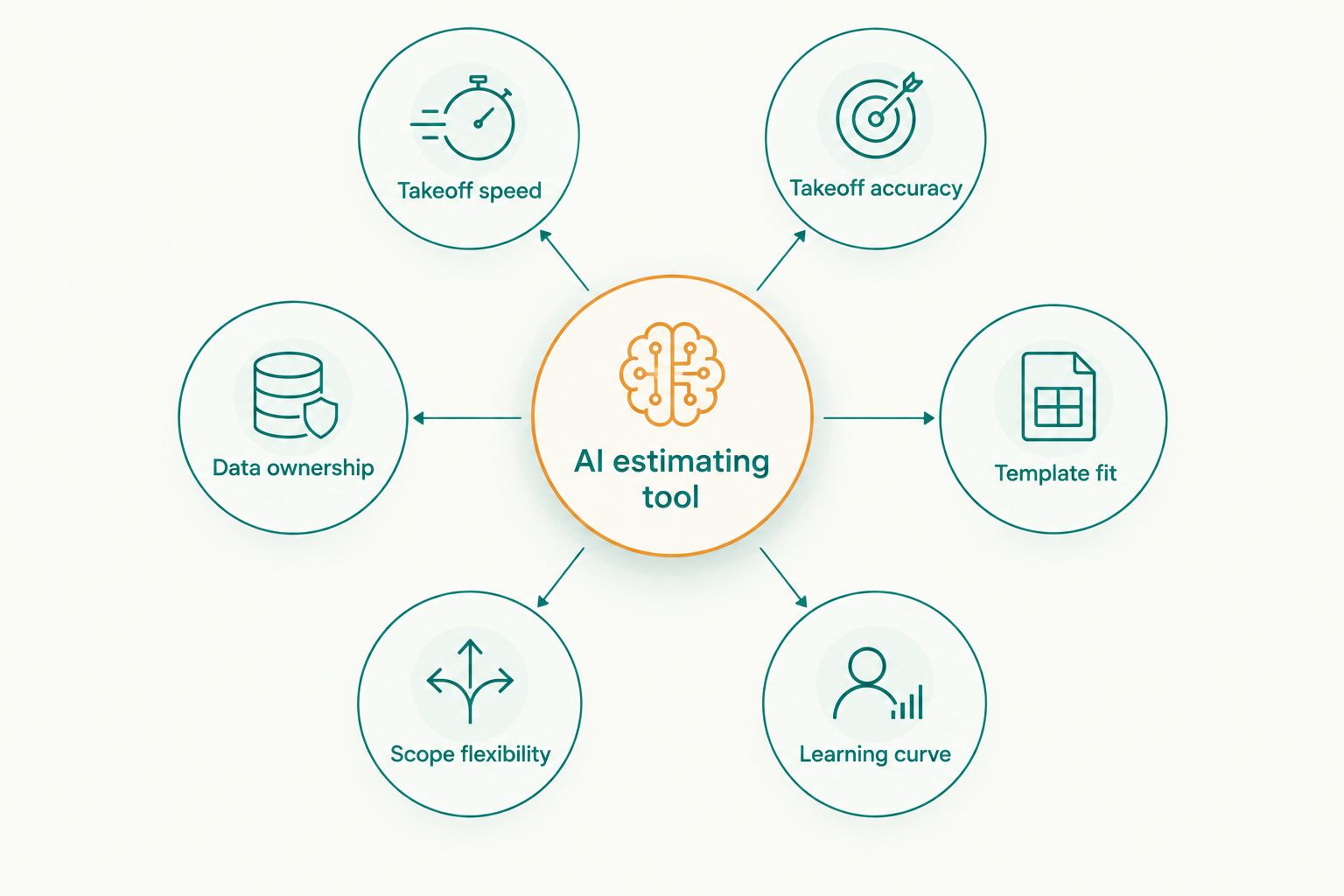
Before ranking anything, here's what actually separates a good tool from a shiny demo:
- Speed from site visit to priced estimate — how many manual steps sit between a walk-through and a number a client can see
- Takeoff accuracy — how well the AI reads plans, photos, or field notes without a human redoing the measuring
- Fit with existing templates — whether the office has to rebuild its estimate and proposal format around the tool
- Learning curve — how long it takes an estimator or office manager to run the tool without help
- Flexibility for non-standard scopes — how the tool handles change orders and jobs that don't match a template
- Data ownership — whether the company owns its estimate history and workflow, or rents access to it
AI construction estimating software at a glance
| Tool | Best for | Standout feature | Key limitation |
|---|---|---|---|
| Togal.AI | GCs needing fast AI area/quantity takeoffs | Automatically marks and measures spaces on uploaded plans | Needs clean digital plan sets to work well |
| STACK | Trade contractors doing digital takeoffs | Cloud takeoff built specifically for trade scopes | Pricing still runs through manual unit cost entry |
| ProEst | Mid-size GCs tracking historical cost data | Central database of past bid costs | Setup takes real time before the data pays off |
| Clear Estimates | Remodelers and small home builders | Templated line items for common remodel scopes | Doesn't flex well for commercial or custom scopes |
| Custom AI estimating system | Owners whose workflow doesn't fit packaged software | Built around the company's actual site-to-quote process | Has to be scoped and built, it doesn't exist off the shelf |
1. Togal.AI: best AI construction estimating software for automated plan takeoffs
Togal.AI reads uploaded architectural plans and automatically marks and measures rooms, walls, and other quantities, cutting the manual measuring step out of the estimate process. It's built specifically around the AI takeoff problem rather than added onto a general estimating platform.
Togal.AI pros:
- Turns a clean PDF plan into measured quantities in minutes instead of hours of manual takeoff
- Cuts down on the measurement errors that come from manual plan reading
- Handles both commercial and residential plan sets
Togal.AI cons:
- Needs clean, current digital plans; field photos or hand sketches alone don't get the AI takeoff benefit
- Estimators still need to review flagged quantities before pricing, it's a takeoff tool, not a full estimate builder
Best for: General contractors bidding plan-based commercial or residential jobs who want the takeoff step automated.
Verdict: Buy if most of your bids start from clean plan sets.
2. STACK: best AI construction estimating software for trade contractor takeoffs
STACK is a cloud-based takeoff and estimating platform built for trade contractors and general contractors, letting a crew mark up digital plans and build a priced estimate inside the same platform. It's an established tool with a long track record in trade estimating specifically.
STACK pros:
- Purpose-built for trade scopes like electrical, plumbing, and concrete, not a generic tool retrofitted for construction
- Cloud access lets multiple estimators work the same plan set at once
- Long history of use across trade contractors
STACK cons:
- Pricing still runs through manual unit cost entry; the AI assist is limited to markup and measurement
- Steeper learning curve for a one-person estimating shop
Best for: Trade contractors and subcontractors who need digital takeoff without overhauling their whole estimating process.
Verdict: Buy for subs running repeat trade scopes.
3. ProEst: best AI construction estimating software for historical cost tracking
ProEst is cloud estimating software built around a central cost database that tracks historical bid data across projects, so a GC's past jobs inform future estimates. The value compounds the longer a company runs jobs through it.
ProEst pros:
- Cost database gets more useful the longer the company uses it
- Handles full commercial estimate structures, not just single-trade scopes
- Built for GCs managing several concurrent bids
ProEst cons:
- Loading and organizing historical cost data takes real setup time before the tool pays off
- Overkill for a small remodeling outfit doing a handful of jobs a year
Best for: Mid-size general contractors who want an estimate database that improves with every closed job.
Verdict: Hold if your company doesn't have organized historical cost data yet. Get that in order first, then bring in ProEst.
4. Clear Estimates: best AI construction estimating software for remodelers
Clear Estimates runs on templated line items for common remodeling and home-building scopes, aimed squarely at smaller residential shops. It's lighter than a full commercial estimating platform because it isn't trying to be one.
Clear Estimates pros:
- Templates cut estimate build time for repeat scope types like kitchens and additions
- Lighter learning curve than full commercial estimating platforms
- Built specifically for remodelers, not adapted from commercial software
Clear Estimates cons:
- Templates don't flex well for commercial or highly custom scopes
- Less useful for GCs juggling a mix of trade types on one job
Best for: Remodelers and small home builders running a steady mix of common project types.
Verdict: Buy for shops doing repeat remodel scopes.
5. Custom AI estimating system: best for non-standard bid workflows
A custom AI estimating system is built around a specific company's actual estimating workflow, site visit photos, voice notes, existing proposal templates, instead of forcing that workflow into a packaged tool's structure. It's not software you buy off a shelf; it's a system scoped and built for how one company actually bids work. You can see what a practical build engagement includes in this breakdown of AI consulting services, and what it typically costs to get one built in this cost breakdown.
Custom AI estimating system pros:
- Matches the way the office already works instead of asking the office to change to fit the software
- Connects the site visit, the estimate, and the proposal so nobody re-keys the same scope three times
- The company owns what gets built, code and accounts included, instead of renting a seat forever
Custom AI estimating system cons:
- Doesn't exist off the shelf; it has to be scoped and built before anyone can use it
- Not worth it for a company whose estimating process already fits a packaged tool fine
Best for: Owners whose bid process mixes photos, voice notes, and scope docs in a way no packaged tool handles cleanly.
Verdict: Skip shopping for more software and get the workflow scoped first.
How this ranking was built
This list weighs how fast each tool turns a plan set, or a site visit, into a priced estimate, how well it fits templates a crew already uses, and how much retraining the office needs to run it. Data ownership mattered too. Some of these tools rent access to your own estimate history. One owns the build outright, because the client owns what gets built.
Which AI construction estimating software should you choose in 2026?
If most bids start from clean digital plans, Togal.AI is the fastest path to a measured takeoff. If the crew is a trade contractor running repeat scopes, STACK fits without forcing a process change. Mid-size GCs with a backlog of past jobs get more long-term value from ProEst, and remodelers running a steady mix of kitchens and additions do fine with Clear Estimates.
The one case none of these four solve well: a bid process built on site photos, voice memos, and scope notes that don't map cleanly to any template. That's the case for a custom AI estimating system, scoped against a dollar number before anything gets built, so the cost is known before the work starts.
FAQ
What is the best AI construction estimating software in 2026?
Togal.AI leads for automated plan takeoffs in 2026, STACK leads for trade contractor takeoffs, and a custom-built AI system leads for bid workflows that don't fit a packaged tool. The right pick depends on how your plans and scopes actually arrive.
Is AI takeoff software accurate enough to skip manual quantity checks?
No. AI takeoff tools like Togal.AI speed up measuring but still flag quantities for a human estimator to review before pricing. Skipping that review step is where takeoff errors slip into a bid.
How much does AI construction estimating software cost?
Cost varies by vendor, company size, and how many seats are needed, so check current pricing directly with each provider. A custom-built system is scoped against a dollar number before any build starts, so cost is known upfront rather than estimated after.
Can AI estimating software replace an estimator?
No. Every tool on this list still needs a person to review AI-generated quantities and set final pricing. What changes is how much manual measuring and re-keying that person does before pricing starts.
Does AI estimating software integrate with existing proposal templates?
Off-the-shelf tools like Clear Estimates and ProEst come with their own templates, which may or may not match a company's existing proposal format. A custom AI system is built to match the templates already in use instead of replacing them.
When does a custom AI estimating system make more sense than off-the-shelf software?
When bids start from a mix of site photos, voice notes, and scope documents that don't map cleanly to any packaged tool's template. At that point, forcing the workflow into off-the-shelf software costs more time than building something around it.
One last thing
The AI takeoff step is the easy part now. Several tools handle it well in 2026. The harder problem sits right after the takeoff: getting that priced quantity list into a proposal and then into the job schedule without someone re-typing it three times. That handoff, not the takeoff itself, is where most estimating time actually disappears, and it's the part off-the-shelf software rarely fixes.